
Bridging Leadership Lessons from the Workplace and Those Experiences Shaping Today's Youth and Tomorrow's Leaders
 I do my best to maintain a positive outlook and mindset. This has been a topic of past blogs but also, I feel weaves its way into what I write about and how I write. My family members will sometimes show frustration with me as I don’t jump in with them to the deep end of the negativity pool, instead choosing to dip my toe and then talk about the alternatives.
A friend of mine is a particular challenge for me due to their negativity that surfaces in every conversation and text that we share. I know many of you are thinking back to our last interaction wondering if it is you… if you are, then maybe you already see an opportunity to change! But, back to the story. While I care about this person, my initial reaction when my phone rings or when I see a text notification is one of dread. I get angry at myself for that feeling afterwards, but when it happens, it already puts me on edge and in a negative frame of mind which I hate. Depending upon my initial mood, my approach to those conversations goes one of two ways: 1) I am short, impatient and I add fuel to support their negativity or 2) I turn philosophical and try to talk about the power of positivity and the potential of the future that has not happened yet. Obviously, I much prefer the latter, but it is a test to be in that mode. In a recent conversation, I was in full positive mode so when my friend started with the sad story and he was feeling sorry for himself, I called him out and talked about staying positive. He responded with, “Good advice but I know me better than you, obviously. Just keeping it real.” Well, I was not going to be denied. So, I challenged them about how they let their frustration get the best of them and then they take it out on others. I said, “Your choice... be a victim of your circumstance or do something about it.” I went on to stress that “you don't have to accept your past as your future. Build new habits going forward.” My friend then engages me and acknowledges what I am saying and even references some podcasts that I have recommended to help with his outlook. It seems like he is trying to build himself up, to speak truth and positivity into himself, but then finishes with a sentence talking about how hard it is to be positive and that their life makes it easier to be in that negative state of mind, regardless of how depressing it is. So, I called him out again. I was not going to let him get away with this negative self-talk to lower his expectations of himself. Because the 2nd Pillar of Impact is to Expect Excellence in yourself and others, and right then, we both needed it. “There you go again. What are you focusing on? What you don't have? What's depressing? Or you could focus your thoughts and words about what is awesome. You must enjoy the moments.” I finish off by paraphrasing Jon Gordon saying it’s impossible to be negative and grateful at the same time. “You’re right,” my friend replied. “That’s just me, I never thought it would be something I had to work at, but I guess after being where I have been for so long, it has enabled me to stay in that state. But trying to NOT focus on the negative is truly a challenge especially when the domino effect starts my days.” I quickly reflect on many of my past experiences with him. The way his anger would bubble up and then be targeted at you or whoever was around. Full throttle anger that you knew was not really about you, but about him and the world he lives in that was built by the choices he made. You knew instantly when he was not on his medication based upon the volatility of his reactions. At those moments, there was no reasoning with him, you just ride the storm out. But this wasn’t one of those days and I needed to push forward. “Believe me,” I said, “I understand the dominoes you are talking about, especially in regard to receiving the impact of those dominoes from what you say. Words are powerful. I share this with you because you say stuff that matters. Maybe not to you, because they are just words. But they are your feelings and represent you, which is why it SHOULD mean something to you.” I went on to suggest that since the words matter, instead of accepting "that's just me" say "that was me, but not anymore". I explained that every time he gives power to the negativity and victim status saying that he can't change, he is taking a step further away from who he can become - a step further away from being happy. I could tell that my friend was deep in thought, soaking in what we had been discussing, so I decided to wrap up our conversation. “You always tell me that you appreciate what I say. So do me a favor and show it with your actions. Don't make excuses. Don't expect anything less than excellence. Not perfection, but the pursuit of excellence in everything you do. Remember, it's not failure, if you are still moving forward.” A quiet and caring response is what I got from my friend, “All in time.” I knew that it wasn’t over. That his thoughts were not focusing on the power of the positive or the future that has left to be lived but instead, was still focused on the decisions and situations that had gotten him to this place. The loss. The bad decisions. The hurt. But, despite his reflections, I could see a glimpse of sunshine. The fate glimmer of hope that today would be a good day. Negative thoughts are going to happen but clinging to and immersing yourself in those negative thoughts will lead to negative actions. That is not good for you or those who care about you. Commit to finding the positive. Commit to moving forward. Commit to being grateful. Commit to focusing on what you can be versus what you were. Commit to be better today than you were yesterday so that you can be better Beyond Today.
2 Comments
 You may not know it, but I'm the smartest person in the world. It goes against my Gandhi-like humble nature to say this, but it is something I have long known to be true. It is something that other people, because they lack the cognitive discipline and inherent problem-solving skills, have struggled to accept.
You see, I probably know more about politics and how to run a nation than any of the elected officials in Washington D.C. I have provided recommendations to eliminate the national debt, to fix the border crisis and to deal with homelessness that is plaguing our citizens. I also have shared how to deal with rising medical costs, creating new jobs and fighting world hunger. If you don’t believe that I have the answers., well… just check out my social media posts. Everyone else is an idiot! I also might be the most incredible driver that has ever sat behind the steering wheel of a motor vehicle. I don’t think Dale Earnhardt would be able to attack the turns as effectively as I do. My speed is almost always as perfect as my use and timing of the turn signals. My uncanny ability to seamlessly merge into and out of traffic is so much better than every other driver on the road. If you don’t believe me, just ride with me and I will point out the flaws of everyone else that is sharing the road with me. Don’t even get me started about my ability as a parent. My kids are incredible, just look at my amazing yet blessed posts on social media. I hate to sound like “that parent” but if you would just listen to what I am saying, you wouldn’t have issues with your kids. It’s not how I would handle it and honestly my kids would never do that, well, because I’m a better parent than you. If you don’t believe me, just look at my posts and listen to what I’m saying about how perfect my life is. What do you mean that isn’t what my kids say? Well, they don’t listen to me either, because if they did, then they wouldn’t say that! Yep, I’m the smartest person in the world, just ask me. I’m not just the smartest person today, I’m also the smartest person Beyond Today. I thought I would have a little fun as a reminder that your strength and value are not found in the voices or opinions of others, but by your thoughts that lead to your actions that lead to your impact on others. Don’t let the judgment of others keep you from reaching your best Beyond Today. “Your beliefs become your thoughts, Your thoughts become your words, Your words become your actions, Your actions become your habits, Your habits become your values, Your values become your destiny.” ― Gandhi  I was first introduced to the people-soft vs people-easy concepts in my early days with Brewer Science as a new manager. The owner and founder, Terry Brewer, was unique in how he created a culture of trust, ownership, and service that stood out from the typical companies. It was more than just words as he built that type of environment in how he engaged the employees daily. He went so far as to provide training and discussion on the soft skills in a weekly leadership meeting that he himself led, where we reviewed leading management books such as the 7 Habits of Highly Effective People, Who Moved My Cheese, Deep Change, and The Fifth Discipline.
Terry focused on creating buy-in and establishing trust to influence the employees instead of using the authoritative position approach. Being a privately held company, he did not focus on bottom line profits but instead felt that if we did things right, and focused on being a Company of the People, By the Technology and For the Customer, the bottom line would take care of itself. When I was a new employee, I struggled with the concept because I grew up in a family where my parents always had a business, and they were clearly in charge. While my siblings and I worked at the businesses at various times, there was no doubt who was in charge. Despite initially struggling to grasp Terry’s vision, it didn’t take long before I recognized the similarities in the entrepreneurial spirit and the sense of ownership that were shared by my parents. My Dad’s mantra was “if it is worth doing, it is worth doing right” and that is a saying I have used with all my own kids as well as fostering that same ownership at work. Interestingly enough, there were quite a few people that struggled with the concept of being “People-Soft”. It wasn’t always the new employees that were either new to this culture or new to the workforce as those who had been at the company for some time, still struggled to come to grips with the role the culture played. Many people viewed that the approach taken to empower employees was actually a weakness that lacked accountability as they felt that they couldn’t make people do certain things. They would become defensive and say, “my hands are tied” or “I can’t make them do that” and would accept that things were not getting done on time. When I was promoted to Director and started participating in these sessions led by Terry, well, that is when I fully understood what he was trying to establish in the future leaders. My buy-in was so dramatic that a more seasoned Director asked me one night over a beer why I had transformed and if I had really bought in or not. I looked at him both dumbfounded but also proud. Dumbfounded because what Terry taught resonated so clearly with me that I assumed everyone was on board and proud because he recognized that I was practicing and living what was being taught. People-Soft Terry and I would have long discussions on the various books and topics. When I broached the topic of a “subculture” that existed where people didn’t feel that they could hold people accountable, Terry became animated and said, “Tom, there is a difference between people-soft and people-easy.” He went on to say that people-soft is when we are practicing the soft skills to create an environment where people want to contribute and are free to find the best way to contribute to our company’s success. We want them to feel ownership and treat everyone with respect. We want to be flexible and aware that everyone has their own experience in life and have a life outside of work. People-Easy In contrast, we are not people-easy. We shouldn’t lower expectations or let people get away without doing what needs to be done. He told me that we have the obligation, as leaders, to provide guidance and expectations so they understand what needs to be done. If they are unable to do the work, then we are responsible for training and educating to make sure that they have the skills. It’s not that you can’t correct the behavior, but more about how you correct the behavior that matters. We won’t tolerate people taking advantage of our company. But we want people to enjoy the benefits of our company. A great example of this was one of my early leaders. He was very hands-off and focused on where he expected the company to go and not so much on how we would get there. I describe his leadership style as someone who would let you walk right up to the edge of the cliff without saying a word. Depending upon how high the cliff, dictated his action. If it was only a small drop-off, he might let you fall knowing that there was low risk of injury and after dusting yourself off, well, you probably wouldn’t do that again. If it was a tall bluff, then he would give you a slight nudge to keep you from falling off, but not enough to change your direction. If you kept hovering along the edge, he would still, just casually give you a nudge until you finally found your path. Early on, his approach was frustrating, and he seemed to be wasting my time. I even asked him, why don’t you just grab me by the shoulders and point me in the right direction. He responded, “but then you won’t learn and grow from finding it on your own.” That really hit home for me. He could have been people-easy and not expected anything from me and just put me in the middle of the plateau away from the edges, but then I would never have enjoyed the view of the edge, the exhilaration of surviving the edge or the life lesson of knowing that while there is always an edge, there may not always be a rail preventing you from falling over. It is the people-soft approach that promotes ownership and learning, that provides a foundation for personal growth that can impact so many others. A people-easy environment is not one of excellence, whether it is from the perspective of the employees or from that of leadership. A people-easy approach whines about accountability while a people-soft environment promotes and encourages ownership. It is with that sense of ownership that a people-soft environment fosters and enables a culture to truly last Beyond Today.  Coming out of the covid pandemic, you kept hearing the phrase “new normal” which for some people brought a breath of fresh air yet for others, created anger and frustration. It escalated as people began to return to the workplace and we started to hear new phrases such as “Quiet-Quitting” and the “Great Resignation.” Regardless of the phrase being used, what became evident is that there was instability and a shortage in the workforce as restaurants and businesses were forced to change their hours and approaches as positions either went unfilled or opened up because an employee decided not to show.
As a person who spent 30 years at the same company, this was the part that was the hardest to watch. It’s not that I don’t think people should pursue new and better opportunities or expand their experiences, I am all for personal growth. But what I have witnessed and experienced in sharing with other people in industry is the need for instant gratification and not appreciating the importance of investment and work to build future success. The young workforce today is getting a bad rap in the media as you can search articles and hear about young people expecting to get a promotion soon after starting a job. They don’t see the value in “working your way to the top” but instead should be recognized for what they could achieve if they were promoted. The instant gratification that comes with likes and heart and other social media emojis seems to be supported about a desperate business climate that is throwing bigger salaries and signing bonuses at unproven commodities because they need bodies. But is it really something new? Kids have always been know-it-alls. I remember classifying my family after a few weeks into my freshman year of college after attending a Psychology 101 class. I can still see my dad shaking his head as if I was an idiot. I remember thinking about how little my dad knew as he had never been to college. Well, now I know. His life was lived through experiences, not by reading about someone else's experiences. In my Pillars of Impact series, I talk about the Courage to Challenge and that as a leader, you must be prepared to challenge the status quo. This is one of the key aspects when I look at new employees. Do they have the ability to assess a situation and find a better pathway forward? But I also need to see HOW they will challenge the status quo. Will they discount what was done previously or the people who chose that path? Will they first seek to understand the why or just push forward with what they believe is the why? There is a reason you can get online degrees in a bunch of disciplines but not to be a surgeon. They need the experiences, the challenges, the stress of making decisions, of living life. When you follow the 2nd Pillar of Impact and Expect Excellence in yourself and others, you realize that nobody at work cares about your GPA. They care about what you know, what you can learn, and most importantly can you apply it to the challenges you face to help the team win. As parents, we have experienced these hard lessons in life firsthand and apparently, a lot of us were so traumatized that we are doing everything in our power to avoid our kids having to experience it themselves. Somehow forgetting the importance of experiencing challenges to help build character and work ethic on which we have built our lives. Articles and books have been written about helicopter parents hovering over their every move or the dozer / lawnmower parents who are trying to clear the way for their kids. But while they believe they are being helpful, they are setting their kids up for failure as the parents have failed to equip them in the basics of life and being overly dramatic, to survive. At some point, it stops, and the kids are forced to sink or swim. They show a pattern of leaving jobs when they don’t get what they want and then their resume is filled with what appears to be job hopping and when they finally realize they need stability in their lives, they won’t be chosen for that big position because employers don’t want to take a chance on training up someone just to leave. If an employer can’t trust an employee to stay to be loyal, they will put that resume aside and look for another. In my next post I will talk about People-Soft vs People-Easy. It fits in well with this topic - both from the workforce and from being raised by the helicopter / dozer parents. An example would be teaching your child to swim. Old school was to throw your child into the deep end and let them sink or swim. An archaic approach that is outdated and proven to have more negative results than positive. A People-Soft approach would help them learn how to swim by getting them classes, supporting them as they learned techniques, helping them to find a way, by learning and doing until they become sufficient swimmers that they can do it on their own. People-Easy is to put them in the kiddie pool and not put them in deep water. Ever. Why did I meander down this path when I started talking about the challenges in our workforce? It might be that after 30 years at a company, well, that’s what we do, we tell stories that wind around before we get to the point. Or maybe, that is the point. Sometimes you just want to get somewhere so you jump on the interstate, and you focus on getting to that final destination. It’s pretty straight, traffic moves along, and you get to your destination. But sometimes, I like to take the Blue Highways and travel the side roads and back roads that are less traveled. You experience the changing landscape and scenery. The hills and valleys. The small towns and drive-ins. Experiences that add to your knowledge base that help shape you and your thoughts. In Robert Frost’s famous poem, The Road Less Traveled, he finishes it off with this final stanza, “Two roads diverged in a wood, and I, I took the one less traveled by, and that has made all the difference.” It is that decision made by you, not by your parents and not made by your boss, that will help shape your future. A future built upon experiences that you created and lived through, shaping who you will become and how you will impact others. Don’t avoid those experiences. Don’t avoid those roads. Take the time to make memories. Take time to put in the work necessary to prepare you for the deep end. To experience what lies Beyond Today. 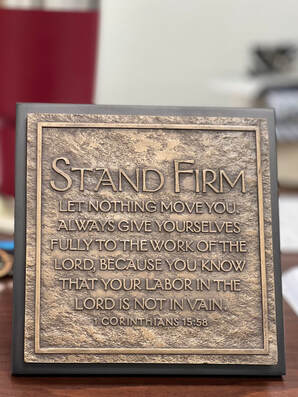 It is amazing how people and opportunities always seem to appear at the right place and the right time. I don’t mean to turn this into a religious post, but too many events seem to happen in my life when they are needed most to simply be coincidence or serendipity.
I have written about the alignment of many people and circumstances that enabled my heart to be restarted so that I could have a second chance. I wrote about a stranger walking his dog on a coastal shore during the early morning hours who spoke truth into my life forcing me to listen. When the realization of his words hit me, I turned around to share my thoughts only to find he wasn’t there. Last week I wrote about the impact you receive from others, who pay it forward in dark times, when it is needed most to keep grinding forward, committing to continue your efforts to positively impact others. Today, I share another moment of clarity that has to be more than chance. A short time after I posted my blog last week that I mentioned above, I received a package at my desk. I recognized the handwriting as that of my mentor, who I have written about in the past. Inside was a motivational desk decor titled Stand Firm, a picture of which is above. It contained a verse from 1 Corinthians 15:58. “Let nothing move you. Always give yourselves fully to the work of the Lord, because you know that your labor in the Lord is not in vain.” I had not spoken to Steve for a couple of months. We had exchanged texts a month ago catching up on personal activities and travels with the plan to connect soon. So how did he know? How did he know that this is what I needed at this moment in time? He shipped the package across the country earlier in the week to show up at my desk, at the right place and the right time. The same day that I posted about the blessing of coworkers, friends, and family challenging me to help me deal with my frustration and to be the leader that they know I can be, I received a gift of love and support saying, Stand Firm. Contractually, Steve is no longer obligated to be my mentor. While he has mentored me for over 10 years, he has done so through our growing bond and friendship. The note in the package said, “I have always appreciated you as a friend and always will! STAND FIRM in all things that you do!!!” As I said at the beginning of this post, it is amazing how people and opportunities always seem to appear at the right place and the right time. It is the knowledge built upon experiences AND faith that enables me to STAND FIRM Beyond Today. 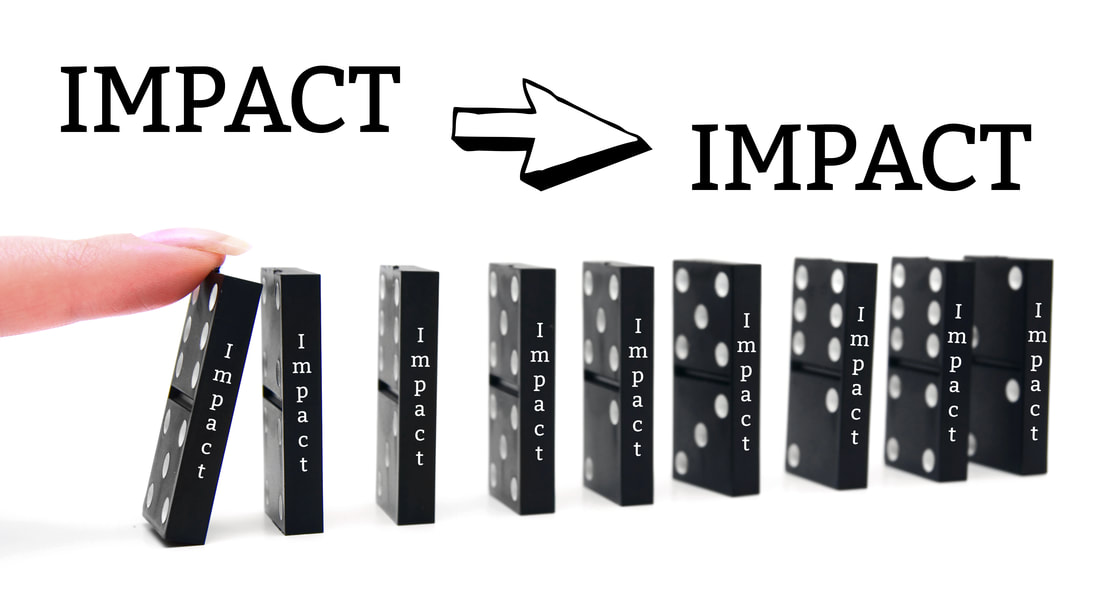 I tend to be an optimist, so much so that it seems to bother my wife and daughter when I try to throw in a positive spin on something. This may surprise some of my coworkers who feel my tendency is to point out areas for improvement…but I view that as looking for the positive potential! I have spent my lifetime being steady when it comes to stress and skillfully hiding it from my family and others, skillfully tucking it away deep into the inner recesses of my heart, mind, and soul. This might be connected to My Day of Impact that resulted in a defibrillator being installed!
So, when my frustration finally bubbles to the surface, the change in me becomes evident by those who know me - not just in the words I say, but in how I say them. It’s in my demeanor and it’s in what I don’t say. I don’t go to this dark place very often, but when I do, it can be a debilitating place that drains the energy, enthusiasm, and passion from me, which for me and who I am, is one of the worst feelings I can have. But it is during those times of darkness when the impact you wish to make moves from the positive to the negative when you must really do some self-reflection. But sometimes, even that time of self-development can reinforce the frustration and continue to spiral into helplessness. Amazingly, things seem to happen and voices rise when they are most needed and people are placed before you to help you stay afloat. My last post, Pivot Towards Your Goal, highlighted those people who had been impacted by my blogs and have shared their stories with me and their feelings to inspire me to write even more blogs. During a stage of frustration, I received an email from a friend sharing a personal poem that they wrote. It caught me off guard for a couple of reasons. First, this ex-military, outdoorsman didn’t pass the stereotype that exists for a poet and second, it was such a personal and vulnerable glimpse into his emotions and his mind. It was truly a blessing to receive something so private and precious. He entrusted me with this piece of him, that he had no clue was exactly what I needed at that point and time. I highlighted the power of Vulnerability in Impact Others by Sharing Yourself. That Impact came full circle. Later that day, I was having a 1on1 with a coworker, who had been sensing my frustration. Because of our relationship that we had built over time, she was courageous enough to point out that she saw I was struggling. But it wasn’t enough to point it out, she provided specific examples and how what I was doing wasn't normal for me and was below my expectations, but also HER expectations for me. She recited my own words from the recent training classes I had given and highlighted the tools that I had used in the class that was critical for me now. She also opened up about how she faced a dark day in her own past and she reminded me that on that day, I had challenged her and helped her find a pathway forward. She said that while that day was the most challenging for her, it was also the day that began her biggest growth. Again, that vulnerability and that Impact came full circle. That evening, a friend I greatly admire, shared my blog post on social media encouraging others to read my blog as he found it beneficial in a lot of ways. This person took the time to share with others and with me. A moment of positivity and caring that he didn’t know was needed, but it had an Impact. The next week two coworkers, who used to be part of my team, continued providing leadership lessons to me as they stepped forward on different occasions to encourage me, to challenge me, to demand better of me, to care for me. We talked about my approach and how that can cloud my impact. My words detract from my actions and my intent. The respect and trust that we had built, empowered them to talk about sensitive topics with someone like me who has a strong personality. But I trusted them, so their words, their friendship had an Impact. That evening, my wife and I are sitting on the couch, and I am sharing all these amazing moments that have had an impact on me. It was hard to share these moments without becoming emotional, because it came from special people at a critical time. My wife looked at me and simply asked, “could you try and care less?” She wasn’t suggesting that I look at what I do as a job and not care about the outcome - to just punch a time clock. But what she was asking was if I could find a way to filter out the things that I can and cannot control. I can find acceptance in those areas where I am empowered and instead of worrying about outcomes, can I enjoy the process of making an impact. She asked me to seek gratitude. She asked me to find the blessings that appear when you need them most. When people you care about and respect come forward to challenge you, you must listen. When they reference your own words and your own training classes as examples to challenge you and your approach - you have no choice but to listen. I could ignore them. Become defensive. Tell them to go to hell. But how could I possibly do that? When they care enough to challenge me? When they have enough respect for me that they want to help me? I have no choice but to honor them and listen to what they have to say. Without them knowing, it was their IMPACT that I needed to get Beyond Today.  When I decided to start my blog, I told myself that my reason for writing was to serve as an outlet for my own mental health. Essentially, it served as a journal to express my thoughts, but not hidden in my nightstand. Deep down, I hoped that it would be a pathway to IMPACT others in a positive way - to engage those who I may not normally engage or even meet. But I made sure my purpose, my value, was focused on what I could control and anything beyond that would be an extra benefit.
It didn't take long to start getting feedback on my blogs. First from people with whom I already had a strong relationship, then I started hearing from people at work that I had not ever talked to - such as interns from other parts of the organization. Casual acquaintances would send me notes or bring up my blog when we would run into each other sharing feedback and their own experiences. A few people engage me on a different level. They pose questions to dig deeper into the topic and challenge my point of view. They compare and contrast to their own experiences to help expand my understanding of other perspectives. Still others, seek out my insight on other topics and ask to explore it further through my blog. They share their own experiences and challenges that they are facing, hoping that I can not only shed a light on what they are facing, but help create pathways through my stories that can help others find their way to a solution as well. One day in the breakroom, I was caught off guard when a coworker started talking about the Friends episode when Ross, Rachel, & Chandler were moving a couch up their apartment stairway with Ross barking at them to “PIVOT” until Chandler finally lost his cool. Actually, that was not the conversation we had, but I love Friends and thought it was a great way to introduce PIVOT as the topic of this blog. My coworker knows my love of basketball and he suggested that a blog post focused on Pivot would be a great way to use a basketball analogy with challenges at work. Merriam-Webster defines pivot (v) as: 1. to turn on or as if on a pivot 2. to adapt or improve by adjusting or modifying something (such as a product, service, or strategy). In basketball, the term is used to describe when a player, typically on offense and with the ball, keeps a foot planted on the ground and then moves the other foot allowing them to “pivot” around the defender. It allows them to change direction and gain a different perspective. His reference to work was one about introducing change, which can be a difficult undertaking at best. What made it even more challenging for him was that he was not responsible for the introduction of a new system, but he and his team were the end-users of the system. The system was introduced without a formal change management plan. Buy-in was not obtained prior to the creation of the system nor were any of the team involved in the design or implementation of the system. It was rolled out as an improvement but in reality, it created a lot of headaches and even some extra work. With his teammates frustrated, pushing back and in some cases refusing to use the new system, this person took it upon himself to seek out the initiator and ask more in-depth questions to get at the WHY. What he soon realized was that there was a bigger purpose for the system than what his team understood or was even told. The real value had never been explained. As he engaged the system owner, he uncovered the hidden value and began to connect the dots on how his team can have a greater impact on the company. He took it upon himself to help his team pivot. He helped them look at the process from a different perspective. He helped them see the value that others get from the system and then connected the benefit to the customer all the way back to where it impacted them. This pivot, around the obstacle in front of them, allowed them to get a clean look at the goal. He not only helped them pivot to a new perspective, but he also allowed them to pivot to a greater sense of worth. This alone would be a great success. But the pivot wasn’t done as he followed-up with the system owner/creator and helped them see the folly of not engaging the end user. He educated them on why there was frustration and the damage that was unintentionally done to productivity, morale, and relationships. In basketball, the pivot is normally focused on the person with the ball. But the teammate also has the ability to pivot, to change their view, to change their pathway to receive a pass, to help their teammate achieve their goal. So don’t get stuck - whether on the court or at work. Be prepared to pivot. To improve your outlook. To improve your position. To improve your chance to achieve your goal Beyond Today. “Fear and faith have one thing in common- they both believe in a future that hasn't happened. Fear believes in a negative future. Faith believes in a positive future.” 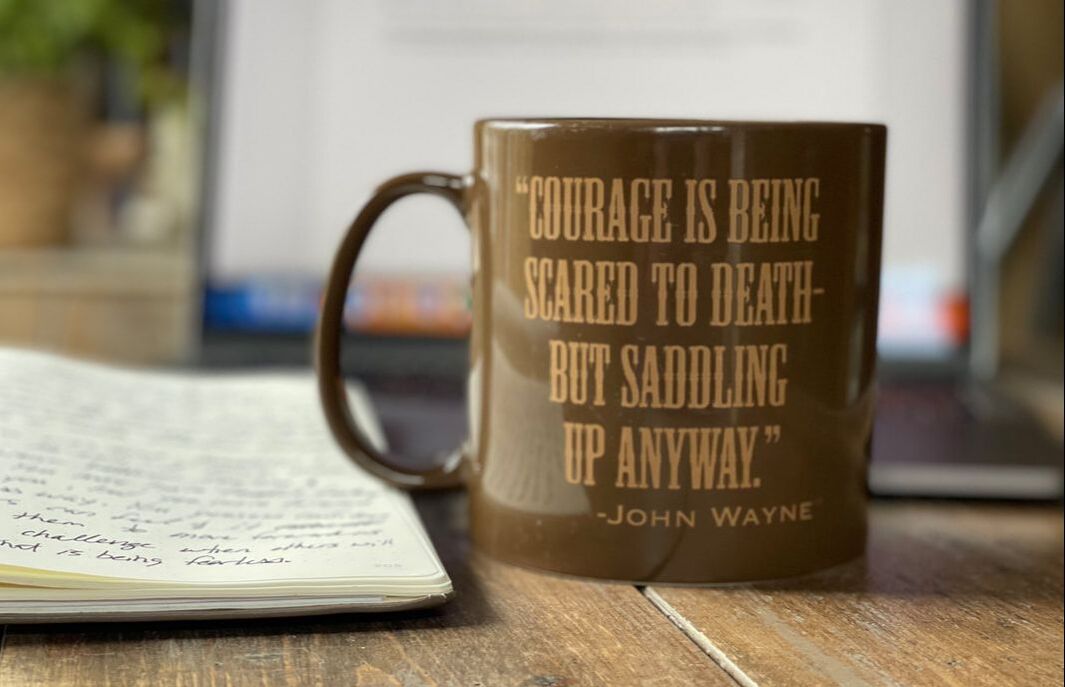 A few months ago, I received feedback from a coworker on one of my blogs. In Who is On Your Team I discussed the dynamics of sibling relationships. He pointed out that he was a middle child and he found it enlightening to see that I was the baby of the family. He wrote “this helps explain a lot of things…” he included some laughing emojis in the note along with a winky face.
We went on to discuss the roles people play, whether on teams or in families, and how that can change over time or even situation to situation. He then paid me a compliment by saying, “I have seen the youngest also be completely fearless and able to succeed in any situation like yourself.” I was taken aback. I immediately responded with “fearless? Not even close!” I went on to explain that I am a walking panic attack waiting to happen. I spend my time bouncing between excitement of the opportunity in front of me and the feeling of being frozen, unable to make a move in fear of an attack ready to swell up inside my chest. I told him that the fact I can hide it up from those around me probably explains the heart attack! His response was kind, thoughtful and encouraging, “I think you are fearless in your willingness to try. Maybe being fearless, and being fearful, are two different things.” It reminded me of one of my favorite quotes by John Wayne, “Courage is being scared to death – but saddling up anyway.” The 1st Pillar of Impact is the Courage to Challenge talks about even when things are not comfortable for you, you still need to put aside the fear and do what is necessary. A site I follow called, the Winning Difference, tweeted out an excerpt from a Will Smith movie called After Earth. “Fear is not real. The only place that fear can exist is in our thoughts of the future. It is a product of our imagination causing us to fear things that do not at present and may not ever exist. Fear is a choice.” They concluded the post with “Fear and doubt have ended more dreams than talent ever has.” What a great message. Fear is a normal response in life. The key is to manage it and recognizing that it is a feeling and not a roadblock. Then, you can visualize your fear as an obstacle to overcome and focus on that desired outcome. The fear of the miss can prevent a stellar basketball player from taking the winning shot. Hall of Fame basketball player, Charles Barkley, said “If you’re afraid of failure, you don’t deserve to be successful.” Fear doesn’t need to be suppressed but instead acknowledged for what it is, a feeling of negativity and doubt. By recognizing the fearful feeling, we can choose the fearless actions that enable us to move forward. To move past our fears and fearlessly move forward Beyond Today. 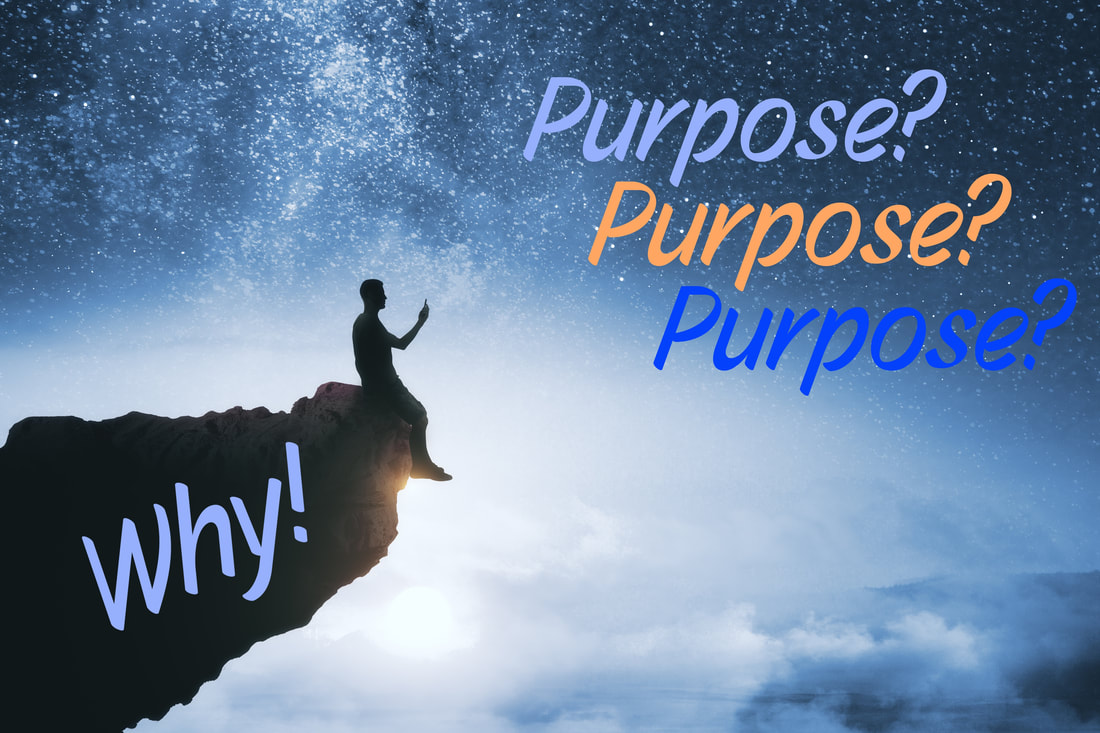 Recently, it seems like I have had a multitude of discussions that have been focused on purpose and why. These conversations have run the gamut of co-workers to family, from sports to life. Simon Sinek has written, “Find Your Why” and given talks on this subject to millions of people. It is in demand because many are trying to connect with their greater purpose. They look at their lives and think there must be more.
Viktor Frankl, a Jewish-Austrian holocaust survivor, wrote the bestseller, Man’s Search for Meaning, which became the foundation of his logotherapy movement. There were several passages of his book that really hit home for me that supported the premise that it is our search for meaning that fuels us as humans to find success. He wrote, “We had to stop asking what we wanted from life and instead what life wanted from us.” Much has been written about the younger generation seeking instant impact and gratification. Not satisfied with putting in time and showing that through hard work and dedication, that they deserve the promotion. They want the promotion and then will show what they can do. But this isn’t a generation thing, as this is something I have observed throughout my lifetime. People spend time changing jobs, changing partners, changing hobbies trying to fill some void and to find themself. Maybe while they spend all the time “searching”, they are missing out on actually finding their purpose. Frankl wrote, “Success, like happiness, cannot be pursued, it must ensue.” I have written before about the power of a vision whether in the 3 Pillars of Impact or in leading a team, Losing Site of Your Vision. The importance of staring at the horizon, keeping your site on where you are going and not letting what is in front of you serve as an obstacle . The risk you have about focusing on the vision, on the dream, is that you lose awareness of what is in front of and around you. What happened to making the most of what you have? Of where you are? Of what you are doing? Happiness and satisfaction are not always something that is found through searching. Sometimes it is created, not by others, but by you. When having discussions with my kids and they are feeling stressed about not knowing what they want to do with the rest of their life, I tell them that very few people know. Early on, my daughter knew that she wanted to work with young kids that needed extra guidance and attention to support their development. Her “why” was in front of her and she is pursuing it today. I asked my kids if they really thought that when I was a young kid that I laid in bed at night dreaming about leading operations in a chemical manufacturing company? Your purpose is more than your job, your why is more than what you are doing at a given moment in time. Frankl shared that there is a difference when people finally understand their purpose, “Once he knows the why for his existence, will be able to bear almost any how.” Sometimes you realize that your why is already inside of you and what you need is to find ways to bring it out into the light. To not only represent what you are doing, but to motivate and inspire what you are doing. Sometimes, you need to take a break from focusing on the future and instead focus on what you have today. Explore what you already have and what you already do and then take the time to understand who you are today and how you can impact what more you can do Beyond Today.  The words written in the Declaration of Independence have inspired generations of Americans as well as citizens of other countries. The story about the young upstart that was willing to fight for their freedoms, despite the odds before them, is inspiring to all people who have ever felt held down. “We hold these truths to be self-evident, that all men are created equal, that they are endowed by their Creator with certain unalienable Rights, that among these are Life, Liberty and the pursuit of Happiness.”
While the declaration was written to declare their independence and rally together the 13 colonies, it wasn’t about forming a new nation. It was written, “That these United Colonies are, and of Right ought to be Free and Independent States.” We have come to recognize this day as being synonymous with the founding or our nation, but in reality, it was the day we stood up and said we were no longer going to be ruled by a foreign power. It was pretty clear that we didn’t want to be ruled by a domestic power as well, since the Colonies viewed themselves as their own sovereign powers. It wasn’t until 10+ years later that the Founding Fathers realized that independence, by itself, without a true purpose, wasn’t all that it was cracked up to be. They recognized the limitations and challenges associated with being independent colonies and set about to create this incredible system of representative democracy. The preamble attempts to provide the “why” that is so critical to unite a people. “We the People of the United States, in Order to form a more perfect Union, establish Justice, ensure domestic Tranquility, provide for the common defense, promote the general Welfare, and secure the Blessings of Liberty to ourselves and our Posterity, do ordain and establish this Constitution for the United States of America.” There are so many critical words within that sentence that each of them could be the subject of its own blog post. But what I enjoy most is the phrase “...in Order to form a more perfect Union…”. It shows that the Founding Fathers were aware of the flaws that resulted after winning their independence. It also shows the recognition that the new nation that they were founding with this Constitution, was not perfect. They showed a willingness to embrace Continuous Improvement and saw this Nation as a journey and not a destination. What a great reminder that it is not an end state that we are trying to achieve, but we are looking to be better than we were yesterday. They chose to work towards a MORE perfect or a better place than they were before. They were not arrogant enough to assume that they would create perfection. On this day, may everyone take a moment to realize that your commitment to work towards a “more perfect” today is the key to improving Beyond Today. |

AuthorTom Brown - a husband and a father who is simply trying to make a difference. Using my experience as a Manufacturing Executive to connect leadership from the boardroom to the hardwood to help teams grow and develop to make a difference in the lives of others. 
Archives
April 2024
Categories
All
|
 RSS Feed